
Evolution Theory, and The Big Thinkers
BANQUET AT DELMONICO’S: Great Minds, The Gilded Age, and The Triumph of Evolution in America
by Barry Werth
Random House, 362 pp., $ 27.00
By Claude R. Marx
February 11, 2009
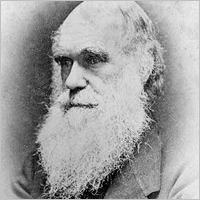
The seemingly never-ending debate over the validity of Charles Darwin’s theories has engaged politicians, scientists, and philosophers with a level of intensity reserved for only a handful of other issues. Unfortunately, many of the books about Darwin’s work and its intellectual offshoots are either extraordinarily dry summaries or politically motivated screeds.
Readers who want an engaging story that deepens their knowledge of these topics will find “Banquet at Delmonico’s” to be a literary treat.
Academic rivalry, politics, social stratification, and romance all make appearances in this engaging book. In describing the personalities, theories, and social conditions that dominated the late-19th-century academic and political worlds, Barry Werth makes full use of all the tools available to the popularthough often badly executed—genre of literary nonfiction.
The book—s title refers to a farewell dinner at a posh New York City restaurant given for English philosopher Herbert Spencer on Nov. 8, 1882, at the end of an American speaking tour during which he promoted his views as social Darwinism.
Werth synthesizes without oversimplifying, and he rarely inserts his own opinions into the narrative. It is hard to find a more concise description of Spencer’s worldview than this: “Spencer held that societies are organisms and that, like living forms, they evolve. He asserted a gradual evolution from primitive, less organized, to advanced, more organized, societies; and he maintained that as societies become more complex, and individual roles (and property) more varied, government must retreat from vast areas of social life so as to allow each individual to rise by his own exertions.”
Spencer, who coined the phrase “survival of the fittest,” is at the center of this multilayered tale, which encompasses an eclectic group of individuals including clergyman Henry Ward Beecher and industrialist Andrew Carnegie.
These men were among those who helped disseminate Spencer’s individualist philosophy. These ideas were sometimes used to justify racial supremacy, an ironic development, given that some of Spencer’s disciples were considered quite liberal. Beecher, for example, was an outspoken abolitionist and the brother of “Uncle Tom’s Cabin” author Harriet Beecher Stowe.
Werth provides mini biographies of all the key players and describes their intellectual and personal interactions, though he often quotes too extensively from their works. The excerpts from Beecher’s adultery trial—sometimes described as the O. J. Simpson case of its time—are so voluminous that the book reads like a biography of Beecher.
Werth’s discussion of Carnegie is much briefer, because though Carnegie was a follower of Spencer’s he was not extensively involved in the public discussions of his views. Carnegie once wrote that “I had found the truth of evolution. ‘All is well, since all grows better,’ became my motto, my true source of comfort.” Spencer had as many critics as fans, and sometimes they were one and the same. In his 1905 dissent in Lochner v. New York when the Supreme Court struck down a maximum-hours law for bakery employees, Associate Justice Oliver Wendell Holmes Jr., noted that “the 14th Amendment does not enact Mr. Herbert Spencer’s Social Statics.” Yet Holmes also had some social Darwinist views. In his 1927 majority opinion in Buck v. Bell, he led the court in upholding a Virginia law allowing sterilization of the retarded because it was “better for all the world” if society “can prevent those who are manifestly unfit from continuing their kind.”
Like many influential works, Spencer’s writings were often distorted and after several generations in existence are still being debated and dissected. Werth’s lively discussion of the subject in “Banquet at Delmonico’s” will introduce a new generation of readers to these ideas.