Now showing through September 6
Language of Color
at the Harvard Museum of Natural History, Cambridge, MA
Price: Free with admission; $ 9.00 adults; $ 7.00 students and seniors; $ 6.00 ages 3 to 18; under age 3 are free
Phone: (617) 495-3045
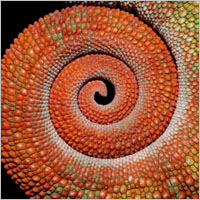
Learn about the diverse palette that makes up the natural world today. With dramatic displays of real animal specimens including bird, mammal, reptile, fish, mollusk, and insect specimens from Harvard’s vast collections, Language of Color will help visitors to understand the nature of color, how different animals “see” it, and how animal color and its perception have co-evolved to produce an extraordinarily complex and diverse palette of colors.
Colors can conceal, warn, intimidate, or attract; and animal colors are so diverse both because these messages vary and because the animals receiving the messages perceive colors in different ways. Through computer interactives, visitors will be given the opportunity to “see” colors through the eyes of other animals, including large parts of the color spectrum that are imperceptible to humans.
Visitors will also have the opportunity to examine the colors in bird feathers and butterfly wings as if through an electron microscope, to explore the contrasting black and white stripes of a 9-foot-high hide of a mountain zebra, and to learn through a video presentation about how zebra stripes develop and why they have evolved. Some scientists have theorized that the variation in width of different zebras’ stripes might be explained by differences in when, in the early development of the zebra fetus, the gene for striping “turned on.”
Another exhibition highlight is a stunning display of live dart frogs whose colors warn predators that they are a bad choice of food.
Another video, filmed by Woods Hole scientists, shows dramatic instantaneous color change in flounder, octopus and cuttle fish.
Now showing through August 16
Shepard Fairey: Supply and Demand
at the Institute of Contemporary Art, Boston, MA
Price: $ 12.00 general admission; $ 10.00 students and seniors; members and children 17 and under are free
Phone: (617) 478-3100
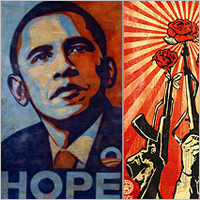
From humble beginnings as a defiant, skateboard-obsessed art student pasting homemade stickers, Shepard Fairey has developed into one of the most influential street artists of our time. Despite breaking many of the spoken and unspoken rules of contemporary art and culture, his work is now seen in museums and galleries, as well as the worlds of graphic design and signature apparel.
His multi-faceted, open-ended and generous artistic practice actively resists categorization. Building off of precedents set by artists such as Andy Warhol and Keith Haring, Fairey shifts easily between the realms of fine, commercial, and even political art.
Fairey’s multi-layered renderings of counter-cultural revolutionaries and rap, punk and rock stars, as well as updated and re-imagined propaganda-style posters, carry his signature graphic style, marked by his frequent use of black, white, and red. Recently, his portrait of Barack Obama, a ubiquitous sight on the campaign trail, drew a new level of attention to the artist’s work and was recently acquired by the National Portrait Gallery in Washington, DC, for its collection.
“Shepard Fairey: Supply and Demand” traces the development of the artist’s career, from the earliest Obey imagery through his latest efforts, and includes screen prints, stencils, stickers, rubylith illustrations, collages, and works on wood, metal, and canvas. The artist is also creating a new mural for the ICA and public art works at sites around Boston.
Now showing through May 17
Splendor and Elegance: European Decorative Arts and Drawings from The Horace Wood Brock Collection
at the Museum of Fine Arts, Boston, MA
Price: $ 17.00 general admission; $ 15.00 students and seniors
Phone: (617) 369-3306
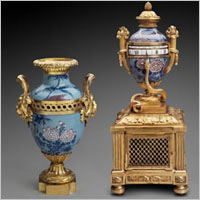
“Splendor and Elegance: European Decorative Arts and Drawings from the Horace Wood Brock Collection” features aristocratic European furniture and decorative arts, drawings, and paintings from the mid-sixteenth to the early nineteenth century. Organized chronologically, stylistically, and thematically, the exhibition includes important examples of English, French, German, and Flemish furniture, ceramics, gilt bronzes, clocks, andirons, and hardstone vases. Highlights include a spectacular Flemish tortoiseshell cabinet-on-stand dating to the mid-seventeenth century; important early blue-and-white Delft wares; one of the earliest long-case clocks by the French royal cabinetmaker André-Charles Boulle; a rare pair of rococo mahogany vase stands inspired by the designs of the English cabinetmaker Thomas Chippendale; a painted secretary desk by the Paris cabinetmaker René Dubois; major examples of porcelain produced at the Chelsea, Meissen, and Sèvres factories in the eighteenth century; and a highly important collection of works executed in bronze, including a cartel clock attributed to Charles Cressent, a mantel clock by renowned bronze-maker Pierre-Philippe Thomire, and a pediment clock attributed to Francois Rémond.
Approximately 75 drawings and paintings provide a broader cultural context for the furniture and decorative objects. Some of the themes that unify the drawings are studies of the human figure, literary illustrations (fables of La Fontaine), religious and mythological subjects, architectural fantasy and ruins, and design drawings for the decorative arts. The exhibition includes a few choice paintings by François Boucher, Joos de Momper, Jacques Linard, and Jean Pillement, and a generous selection of outstanding drawings by, among many others, Gericault, Guercino, Fragonard, Greuze, Oudry, Piazzetta, Rubens, and G.D. Tiepolo.
Support for “Splendor and Elegance: European Decorative Arts and Drawings from the Horace Wood Brock Collection” comes in part from the Cordover Exhibition Fund and a gift from Melvin Seiden.