

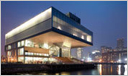

Brandeis President Issues an Apology
By Tracy Jan and Peter Schworm
Globe Staff / February 6, 2009
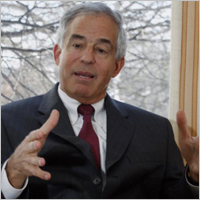
Brandeis University president Jehuda Reinharz issued a public mea culpa to the university community yesterday, admitting that he mishandled last week’s announcement about the planned closing of the school’s Rose Art Museum.
“To quote President Obama, ‘I screwed up,’ ” Reinharz wrote in a letter e-mailed to the faculty and students. In yesterday’s attempt to quell a public outcry, Reinharz walked a fine semantic line, saying in his letter that “the museum will remain open” and “be more fully integrated into the university’s central educational mission.”
In reality, the Rose will eventually cease to operate as a public art museum. While the facility will remain open, it will over time become an educational center for Brandeis students and faculty members, Reinharz told the Globe Wednesday. It will include more student and faculty exhibits, and the public will still be allowed to visit.
“We’re saying we’re turning it into a gallery and a teaching site for the faculty of the fine arts,” Reinharz said in the Wednesday interview. “We don’t want to be in the public museum business.”
Reinharz’s effort yesterday to soothe a fractured Brandeis community followed last week’s surprise announcement that the school planned to close the museum and sell off its artwork as it confronts a financial crisis. That decision had incited protests on campus as well as a firestorm of criticism from the art and philanthropic worlds.
Michael Rush, museum director, said yesterday that he accepts the apology by Reinharz, but dismissed the president's attempt to cast a more positive light on the museum’s fate.
“This does not change the future of the Rose Art Museum, as far as I can see,” said Rush, whose contract expires in June. “I think the university is to be praised for apologizing for the lack of openness in the process, but the apology is for the process, not the content.”
As for the art, Reinharz said that the university does not intend to put all 7,180 works on the auction block. Only a “minute number” would be sold “if and when it is necessary,” he said in Wednesday’s interview. Rush said that selling any part of the $ 350 million Rose collection would be unacceptable.
In his letter yesterday, Reinharz wrote, “In retrospect, I wish I had handled the initial statements I made in a far more direct way.”
A Brandeis press release issued last Monday said: “Plans call for the museum to close in late summer 2009. . . . After necessary legal approvals and working with a top auction house, the university will publicly sell the art collection.”
But that statement, Reinharz wrote yesterday, did not accurately reflect the board’s decision to simply allow for the art works to be sold if it becomes financially necessary. “I assure you that other options will also be considered,” Reinharz wrote yesterday.
He also said he regretted not fully engaging the Brandeis community leading up to the decision by the school’s board of trustees about the museum. “I take full responsibility for causing pain and embarrassment in both of these matters,” he said.
His apology, a clearly orchestrated attempt at damage control, came on the heels of the hiring of Rasky Baerlein Strategic Communications, a public relations firm specializing in crisis management.
Brandeis was forced to consider the drastic step of closing its museum, Reinharz said, because it operates “on the edge” financially due to its grand ambitions, relative youth, shrinking endowment, and over-reliance on donors, many of whom have seen their fortunes tumble in the stock market and in the Ponzi scheme allegedly run by Bernard Madoff.
Reinharz released the letter following a rebuke from faculty late Wednesday, urging him to suspend any final decisions on the museum. His administration’s abrupt announcement last week had created a “crisis of confidence” among faculty members, the faculty said in a letter to the president.
More than 60 faculty members, including some of the Waltham university’s most prominent and longest-tenured professors, signed the letter. Faculty members took Reinharz to task for excluding them from discussions about the university’s financial struggles, which left them “feeling uninformed by an administration bent on taking speedy action.”
“When transparent and accountable governance is circumvented anywhere in the university, we all suffer,” the faculty wrote. “When that breach of process results in adverse publicity for the university as a whole, as well as serious damage to the intellectual work undertaken by our colleagues in Fine Arts and their students, we all feel threatened.”
Faculty members also advised a deliberate approach. “Because closing the Rose Museum was authorized but not mandated by the board of trustees, we hope that you will reassure us that you plan to hold off on any final decision about the Rose at this juncture,” they wrote.
A spokesman for Reinharz, Joseph Baerlein, said last night that the president’s letter reflected his desire to work more closely with the Brandeis community on the future of the museum.
English professor John Plotz, who helped organize the faculty response, said his colleagues took Reinharz’s apology as a sign of good faith. “I definitely think it’s a hopeful sign that he’s hearing us,” Plotz said. “It’s good he’s starting to listen, and I hope that continues.”